
Tattoo Style Guides: How to Choose a Tattoo Style That Fits You

Updated: Aug 5
Choosing a tattoo is about more than deciding on an image. The same subject can look very different depending on the style used to create it.
A flower tattoo designed by Singapore artists can appear delicate and understated in fine-line work, bold and graphic in a traditional design, or highly detailed in black-and-grey realism.
A dragon may be interpreted through Japanese, Chinese, illustrative, or realistic tattooing, and even a Chinese calligraphy tattoo Singapore studios produce will look completely different depending on the script style chosen.
The right tattoo style should suit your design idea, placement, available space and long-term taste. It should also match the artist’s strengths.
This guide compares several popular tattoo styles and explains how to choose the approach that feels right for you. At Inkcraft Tattoo Studio, we walk clients through this exact decision every week, and the same principles apply no matter which style you eventually pick.
Key Takeaways
Begin with the subject, meaning or visual mood you want the tattoo to express.
Decide if you prefer a bold, subtle, realistic, decorative, or minimalist appearance.
Match the style to the size and placement available on your body.
Review an artist’s portfolio for similar work, including healed examples where possible.
Choose a style that reflects your long-term preferences rather than following a trend without careful thought.
What is a Tattoo Style?
A tattoo style is the visual approach an artist uses to interpret a subject on the skin. It shapes how the design is drawn, shaded, coloured and arranged.
Different tattoo styles may be used:
Thin or bold outlines
Soft or heavy shading
Bright, muted or monochrome colour palettes
Realistic or simplified forms
Detailed or minimal compositions
Solid black areas or open negative space
Traditional, cultural or contemporary motifs
The subject alone does not determine the style. A rose, for example, can be designed as a fine-line outline, a realistic botanical study, a bold traditional tattoo, or part of a larger Japanese composition.
Choosing a tattoo style, therefore, means deciding how you want the subject to look and feel, not only what you want it to represent.
Popular Tattoo Styles and What Suits Them
There is no single style that works best for every person or design. Instead, each approach has its own visual qualities, practical requirements and common uses.
Fine Line and Minimalist Tattoos
Fine line tattoos use thin, controlled lines to create a delicate, understated appearance. They are often chosen by clients who prefer subtle artwork or designs that fit easily into everyday life.
Common subjects include:
Small flowers and leaves
Initials and dates
Simple animals
Geometric outlines
Celestial symbols
Minimal portraits
Personal icons
Minimalist tattoos usually reduce the subject to its essential shapes. They may use little or no shading and rely on clean spacing to keep the design readable.
A fine line does not always mean extremely small. A detailed fine line design still needs enough room for individual elements to remain distinct. Compressing too much detail into a small area can reduce clarity over time.
This style may suit you if you prefer refined, lightweight artwork and are comfortable with a more restrained visual effect.
Black and Grey Realism
Black-and-grey realism creates depth and lifelike detail using black ink, grey tones and controlled shading.
The style is commonly used for:
Portraits
Animals
Statues
Religious imagery
Nature scenes
Architecture
Film or cultural figures
Rather than relying on colour, black-and-grey realism builds form through contrast, texture and smooth tonal transitions. Darker areas create depth, while lighter sections and open skin define highlights.
Realistic tattoos generally benefit from a larger scale. Portraits, facial features, fur, fabric and detailed backgrounds need enough space to remain recognisable.
The artist’s technical ability is especially important. Review work showing similar subjects, and pay attention to proportions, shading smoothness, and how well the focal point stands out.
This style may suit you if you want a detailed, dramatic tattoo with a highly dimensional, photographic appearance.
Colour and Watercolour Tattoos
Colour tattoos can range from bold, saturated artwork to soft designs with painterly transitions and limited colour palettes.
A colour tattoo may be used:
Strong outlines and solid fills
Smooth gradients
Bright, contrasting shades
Muted, natural tones
Selected colour accents
Watercolour-inspired washes
Watercolour tattoos often imitate paint through blended edges, splashes and softer transitions. Some designs use minimal outlines, while others combine painterly colour with a structured black foundation.
Suitable subjects include flowers, animals, abstract artwork, landscapes, illustrated characters and decorative compositions.
Colour selection should support the design rather than be added without a clear plan. The artist may recommend a palette based on the subject, contrast, placement and your skin tone, such as bright, muted or limited tones.
This style may suit you if colour plays an important role in the tattoo’s mood or meaning, and you prefer a more expressive visual result.
Traditional American Tattoos
Traditional American tattoos are recognised for bold outlines, simplified imagery and limited, high-contrast colour palettes.
Common motifs include:
Roses
Eagles
Snakes
Daggers
Swallows
Hearts
Panthers
Nautical imagery
The designs are usually clear and immediately recognisable. Strong outlines and simplified details keep the image readable without subtle textures or realistic shading.
Traditional designs can work as individual pieces or as part of a larger collection. Their defined shapes often make them suitable for arms, legs, shoulders and other areas where multiple tattoos may be arranged over time.
This style may appeal to you if you prefer bold, graphic artwork with a classic tattoo appearance.
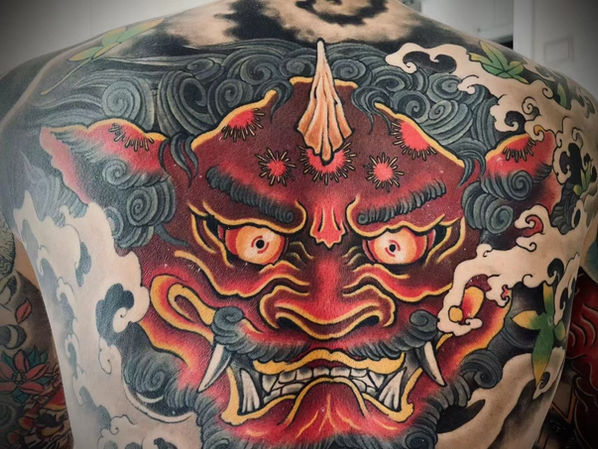
Japanese Tattoos
Japanese tattoos are often built around larger, flowing compositions that follow the body's contours. Common motifs include:
Koi fish
Dragons
Tigers
Hannya masks
Samurai
Peonies
Cherry blossoms
Waves, clouds and wind
A Japanese tattoo usually involves more than placing a single symbol on the skin. The main subject is often connected to flowers, seasonal imagery and background elements that create movement.
The style is particularly suited to sleeves, back pieces, thighs, chest panels and other larger areas. Smaller Japanese-inspired tattoos are possible, but the composition may need to be simplified.
Japanese tattooing may suit you if you prefer symbolic imagery, strong outlines, and artwork that flows across the body as a single connected scene.
Floral and Botanical Tattoos
Flowers are among the most adaptable tattoo subjects because they can be interpreted in many styles.
A floral tattoo might be:
Delicate and fine-lined
Realistic and botanically detailed
Bold and traditional
Colourful and painterly
Decorative and illustrative
Integrated into a Japanese composition
Combined with lettering or geometric forms
The flower itself may also shape the design. A rose, peony, orchid, chrysanthemum or cherry blossom has a different shape, cultural association and visual character.
Placement affects how the stems, leaves, and petals flow. Long botanical designs work well along the forearm, ribs, calf, or spine, while rounded floral arrangements can suit the shoulder, thigh, or upper arm.
Someone considering a flower tattoo in Singapore can begin by deciding whether they prefer delicate linework, realistic detail, or a bolder decorative composition.
Script and Calligraphy Tattoos
Script and calligraphy tattoos use words, names, dates, quotations or handwritten text as the main design.
Important considerations include:
Font or brush style
Letter spacing
Size
Line length
Placement
Legibility
Translation accuracy
Simple lettering may appear easy to create, but clean script requires precise spacing and consistent linework. Very small text can also become difficult to read, especially when letters are placed too closely together.
When using another language, accuracy matters as much as appearance. Direct word-for-word translation can create awkward or incorrect phrasing.
For a Chinese calligraphy tattoo design in Singapore, the wording should be checked for linguistic accuracy and visual balance. The chosen characters should communicate the intended meaning naturally and fit the brush or calligraphic style.
This approach may suit you if the words themselves convey the tattoo's meaning and you prefer a clean, personal design.
Blackwork, Geometric and Tribal Tattoos
Blackwork uses solid black ink, bold shapes and strong contrast. It can include abstract forms, decorative patterns, large filled areas or highly detailed line-based imagery.
Geometric tattoos rely on structure, repetition, symmetry and carefully measured spacing. They may use circles, lines, polygons, mandala-inspired arrangements or body-following patterns.
Tribal tattoos can involve bold black shapes and designs that wrap around the arms, shoulders, chest or legs. However, some tribal motifs are specific to particular cultural traditions and should not be treated as generic decorative patterns.
Research the origins of culturally rooted imagery and work with an artist who understands its context. This helps avoid combining symbols incorrectly or using a meaningful pattern without recognising its significance.
These styles may suit you if you prefer graphic, structured or body-following artwork with a strong visual presence.
How to Choose a Tattoo Style That Fits You

Understanding the differences between styles is useful, but the final decision should also reflect your design, body and personal taste.
Start With the Subject
Begin with what you want the tattoo to show.
Some subjects naturally lend themselves to particular styles:
Portraits often suit realism
Short words and names suit script
Flowers can work across fine line, realism, traditional or Japanese styles
Dragons can be interpreted through Japanese, Chinese, illustrative or realistic approaches
Abstract concepts may suit blackwork, geometric or minimalist designs
These are not strict rules. The same subject can be reinterpreted in several ways, but identifying the focal idea makes it easier to compare suitable options.
Decide How You Want the Tattoo to Feel
Think about the overall visual effect rather than focusing only on the subject.
Ask yourself whether you want the tattoo to feel:
Bold or subtle
Realistic or stylised
Decorative or symbolic
Dark or colourful
Minimal or highly detailed
Traditional or contemporary
Soft or dramatic
A tiger in black-and-grey realism may appear intense and lifelike. The same tiger in a Japanese composition may look more symbolic and dynamic, while a traditional interpretation may be bolder and more graphic.
Describing the mood you want can help the artist recommend a suitable approach.
Match the Style to the Size
Certain styles require more space than others.
A basic fine-line symbol may work at a smaller size, while realism usually needs more room for shading and fine detail. Japanese pieces often require space for the main subject, flowers and background movement.
Traditional tattoos can remain clear at moderate sizes because they use bold outlines and simplified forms. Script requires enough space to keep every letter legible.
Avoid selecting a highly detailed reference image and asking for it to be reduced dramatically. A smaller version may need to remove shading, textures or secondary elements.
Consider the Placement
The available body area can influence which styles and compositions work best.
For example:
Forearms can suit script, elongated florals and illustrative designs
Shoulders work well for rounded or radiating compositions
Sleeves allow connected Japanese, blackwork or botanical designs
Backs provide space for realism, large scenes and symmetrical artwork
These accommodate detailed portraits, florals and broader compositions
Ribs and spines suit longer, vertical designs
Your artist should adapt the design to the body's contours rather than treating the skin as a flat surface.
Think Beyond Current Trends
Tattoo trends can provide useful inspiration, but popularity alone should not determine your choice.
Save references over several weeks and look for repeated preferences. You may notice that you consistently choose soft black and grey work, bold outlines, limited colour or botanical shapes.
Repeated preferences are often a more reliable guide than one image that happens to be popular at the time.
You do not need to avoid trends completely. The aim is to understand whether you genuinely like the style or are responding only to its current visibility.
Can Different Tattoo Styles Be Combined?
Tattoo styles can be combined successfully when there is a clear visual hierarchy and a consistent design plan.
Possible combinations include:
Fine line with soft colour
Black and grey realism with geometric framing
Floral imagery with script
Blackwork with negative-space patterns
Japanese motifs created in black and grey
Realism with selected colour accents
The design should usually have one dominant style. Secondary influences can then support the main approach without competing with it.
For example, a realistic animal portrait may be framed with simple geometric elements. A floral tattoo may use fine lines with restrained colour. Script can be incorporated into a botanical composition if the spacing and line weight feel compatible.
Combining too many unrelated techniques may make the tattoo feel fragmented. Strong realism, traditional outlines, watercolour splashes, and intricate geometric patterns may not work together unless they are carefully planned.
If you already have tattoos in different styles, the artist can also use spacing, background elements or a consistent colour palette to create greater visual balance between them.
How to Choose the Right Tattoo Artist
A talented tattoo artist may not be equally experienced in every style. Choose someone whose existing work closely reflects the result you want.
Review the artist’s portfolio for:
Similar subjects
The intended tattoo style
Comparable sizes
Relevant placements
Consistent linework
Smooth shading or colour
Healed tattoos were available
Do not assess the portfolio only by the number of followers or the overall quality of unrelated work. An artist known for bold traditional pieces may not be the best fit for a delicate, realistic portrait, even if both require technical skill.
The consultation is also important. A suitable artist should be able to explain:
Which style fits the idea
Whether the proposed size is realistic
How the design should follow the body
Which details need to be simplified
Whether colour or black and grey would work better
How the tattoo may be extended later
Pay attention to how clearly the artist communicates. Professional guidance should help refine your idea without dismissing your preferences.
Questions to Ask During Your Consultation
Bring several references and ask questions that help clarify the visual direction.
Useful questions include:
Which tattoo style best matches my reference images?
Can this subject work in more than one style?
Is my preferred size large enough for the intended detail?
Will the design remain clear in this placement?
Should I choose colour or black and grey?
Can I see similar completed or healed work?
Can the tattoo be extended into a larger composition later?
Are any elements of my references visually incompatible?
Which details should be simplified?
How will the design follow the shape of my body?
You do not need to use technical terminology perfectly. Point out the exact features you like, such as thin lines, heavy shading, bold outlines or muted colour.
Find a Tattoo Style That Feels Like You
The right tattoo style should support the subject, suit the placement and reflect how you want the finished artwork to look over time.
You do not need to decide on a precise style name before speaking with an artist. Bring several references and explain what appeals to you about each image. The artist can identify common visual qualities and recommend an approach that fits your idea.
Inkcraft Tattoo Studio works across multiple tattoo styles, including floral, script, black-and-grey, colour, Japanese, and Chinese-inspired designs.
Contact Inkcraft Tattoo Studio to discuss your references, preferred placement and tattoo design ideas before arranging your session.
Frequently Asked Questions
What tattoo style ages best?
No single tattoo style automatically ages better than any other. Long-term clarity depends on factors such as line spacing, contrast, size, placement, sun exposure, aftercare and the artist’s technical execution.
Designs with sufficient spacing between details and appropriate contrast generally remain easier to read. Your artist can recommend adjustments based on the chosen style.
Can the same tattoo idea work in different styles?
Yes. Most subjects can be interpreted through several tattoo styles. A flower can become a fine-line outline, a realistic botanical piece, a traditional tattoo, or part of a Japanese composition.
Compare different versions of the same subject to decide which visual approach best reflects your preferences.
Should all my tattoos use the same style?
Your tattoos do not need to use one style. Many people collect work from different artists and traditions.
However, tattoos placed close together may benefit from some consistency in size, spacing, colour or line weight. An artist can help you plan how a new design will sit alongside your existing tattoos.
How do I describe a tattoo style if I do not know its name?
Bring several reference images and identify the exact features you like. You might prefer thin lines, realistic shading, bold outlines, limited colour, open space, or a highly detailed composition.
An experienced artist can use these preferences to identify a suitable style and adapt it to your design.


Comments